
Jalapão: a 5-day independent itinerary from Palmas
Best time to go, distances from Palmas, a 5-day itinerary and the rules of Jalapão State Park: 4x4, guide, voucher and entry times.
Published on
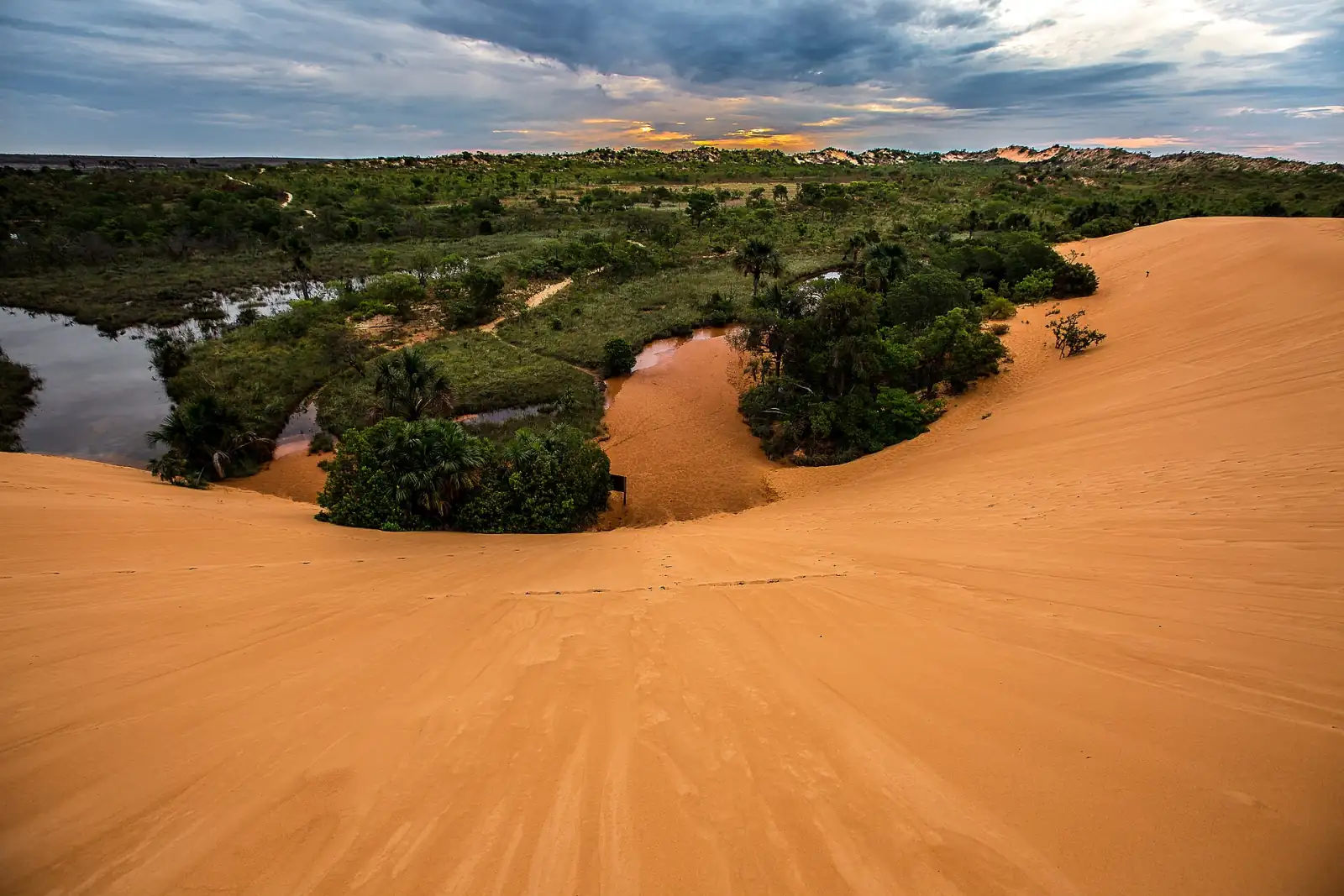
Jalapão lies in eastern Tocantins and brings together dunes, fervedouros (spring pools where the upwelling water keeps you afloat), waterfalls and communities known for golden grass (capim-dourado) crafts. The region is vast, the roads are unpaved and some visits require advance booking.
That is why, here, logistics make or break the trip.
What Jalapão State Park is
The park was created on 12 January 2001, covers just over 158,000 hectares and lies in the municipality of Mateiros. It is managed by Naturatins, the Tocantins Nature Institute, which describes it as the largest continuous area of well-preserved Cerrado (Brazilian savanna) in the country.
Inside the park, visits to the Dunes and to Serra do Espírito Santo are controlled by Naturatins. Fervedouros, waterfalls and canyons are spread across the region, in several municipalities.
Best time to go
You can go all year round, but the Tocantins government points to the dry season, from May to September, as the most recommended, mainly because of road conditions. It is also the period with the most visitors.
From October to April, rain can make access harder, turn the water murky and spoil the sunset views. On the other hand, the days are less hot.
How to get there from Palmas
Palmas, the state capital, is the main entry point by air. From there, the state government describes two road routes:
- Southern route: TO-050 to Porto Nacional and TO-255 to Ponte Alta do Tocantins, 187 km from Palmas. From there to Mateiros it is about 160 km of dirt road.
- Northern route: TO-020 to Novo Acordo (115 km), TO-030 to São Félix do Tocantins (147 km) and TO-110 to Mateiros (79 km).
With both routes, you can do a loop: go in through Ponte Alta and come out through São Félix, without repeating any road.
5-day independent itinerary
Day 1 – Palmas to Ponte Alta do Tocantins. Leave early. In the afternoon, Cânion Sussuapara and, at the end of the day, Pedra Furada, about 35 km from Ponte Alta. The official Jalapão portal suggests sunset to see the colours of the sandstone.
Day 2 – On to Mateiros. Dirt road with a stop at Cachoeira da Velha, a waterfall about 15 metres high, and a swim at Prainha do Rio Novo, just beyond it. In the late afternoon, the Dunes: from the entrance to the top it is about a 20-minute walk.
Day 3 – Serra do Espírito Santo and fervedouros. The trail to the top is about 8 km round trip, and morning entry starts early. Then, fervedouros around Mateiros, such as Ceiça and Buritizinho, and Cachoeira do Formiga, with its greenish water.
Day 4 – Mumbuca and São Félix do Tocantins. Visit Mumbuca, a quilombola (traditional Afro-Brazilian) community and a reference in golden grass crafts, then continue to São Félix, about 80 km from Mateiros. The area has the Bela Vista, Veredas and Por Enquanto fervedouros and Cachoeira das Araras.
Day 5 – Back to Palmas on the northern route. Drive via Novo Acordo. Set aside the whole day for the journey, with stops.
Park rules that shape the itinerary
Naturatins Normative Instruction No. 02/2024 sets out how the Dunes and Serra do Espírito Santo work:
- Voucher and guide: entry requires a voucher issued in advance and an accredited tour guide or local environmental guide.
- Entry times: Dunes from 6:00 to 10:00 and from 14:00 to 17:30; Serra do Espírito Santo from 5:00 to 9:00 and from 14:00 to 16:00.
- Daily cap: there is a maximum number of vouchers per day. On public holidays, secure yours early.
- Not allowed: climbing up or down the dunes' main wall, crossing the line at the edge of the dunes, camping, fires, alcohol, cigarettes, sound systems, pets (except guide dogs), collecting plants or rocks, and drones without authorization.
Golden grass also has its own rule: according to Brazil's Ministry of Tourism, Tocantins regulations do not allow raw golden grass to be taken out of the region. Buy finished pieces made by the communities.
Safety and logistics
- 4x4 vehicle: the attractions are on dirt roads and the soil is sandy. The state government recommends a 4x4.
- Local guide: besides being mandatory at the Dunes and the Serra, a guide helps you fit together times, distances and crossings.
- Long stretches: plan water, food and fuel before each leg and check with your guide where to refuel.
- Better in a group: Naturatins recommends travelling in groups and touring with licensed agencies. For solo travellers, joining an organized group solves both transport and safety.
- Support: Mateiros has a Tourist Information Centre.
At the fervedouros, follow the on-site rules on swimming time, capacity and the use of creams.
How much it costs
The main costs are 4x4 transport, the guide, accommodation and attraction fees, where they apply. Sharing the vehicle with other people is what most lowers the cost per person. Also check whether the voucher is charged on your travel dates.
How PlanSafeTrip helps
PlanSafeTrip is not a travel agency and does not sell packages. We design the most economical route with the least time on the road, match voucher times with sunset times and make the bookings with you, directly with airlines, guesthouses and accredited guides. You only pay for the planning hours.
Want Jalapão at your own pace, solo, with family or in a group? Plan my trip.
Sources
- Governo do Tocantins – Parque Estadual do Jalapão completa 23 anos (acesso, época e atrativos)
- Governo do Tocantins – Destino turístico para o ano inteiro, Jalapão tem alta no fluxo de visitantes em julho
- Governo do Tocantins – Parque Estadual do Jalapão celebra 24 anos
- Naturatins – Instrução Normativa nº 02/2024 (Diário Oficial do Tocantins nº 6574)
- Governo do Tocantins – Portal oficial do Jalapão
- Governo do Tocantins – Manutenção da TO-255 na região do Jalapão
- Governo do Tocantins – Com roteiros para aventura, Jalapão é destino de turismo
- Governo do Tocantins – Recorde de visitação nas dunas do Jalapão (orientações do Naturatins)
- Ministério do Turismo – Jalapão e capim dourado: tesouros naturais do coração do Brasil